
Nova Autonomous Detection Engine
NADE. Turn detection gaps into reviewed improvements.
The Nova Autonomous Detection Engine helps detection teams find gaps in coverage and develop rules that address them. NADE uses observed activity, threat context, and detection feedback to prepare a proposed change with its rationale and expected behavior. Teams can examine the supporting evidence and validation results before approval. A generated proposal is not an active rule.
Autonomous in discovery. Disciplined in activation.
See how work moves through Nova
Move through current product views one step at a time. Each view answers a different security question and keeps the available evidence and limits visible.
NOVA AUTONOMOUS DETECTION ENGINE
NADE uses AI assistance to propose detection rules based on observed gaps. Your team can review what a rule would detect and why it is useful. Rule activation follows the configured review and validation controls.
01 · Coverage Intelligence
Build detection improvements from observed security activity.
Review detection gaps using the security events, existing rules, and analyst feedback available in Nova.
Coverage gaps
Identify recurring activity and security questions that the current detection set does not fully address.
Anomaly context
Use reviewed behavioral change from Qyronis as context for a candidate detection. Never treat it as proof on its own.
Threat relevance
Connect applicable threat intelligence and technique context to explain why a proposed detection matters.
Observed evidence
Base each proposal on activity and detection gaps found in your environment.
02 · Proposal Lifecycle
Review the detection proposal, its evidence and intended behavior.
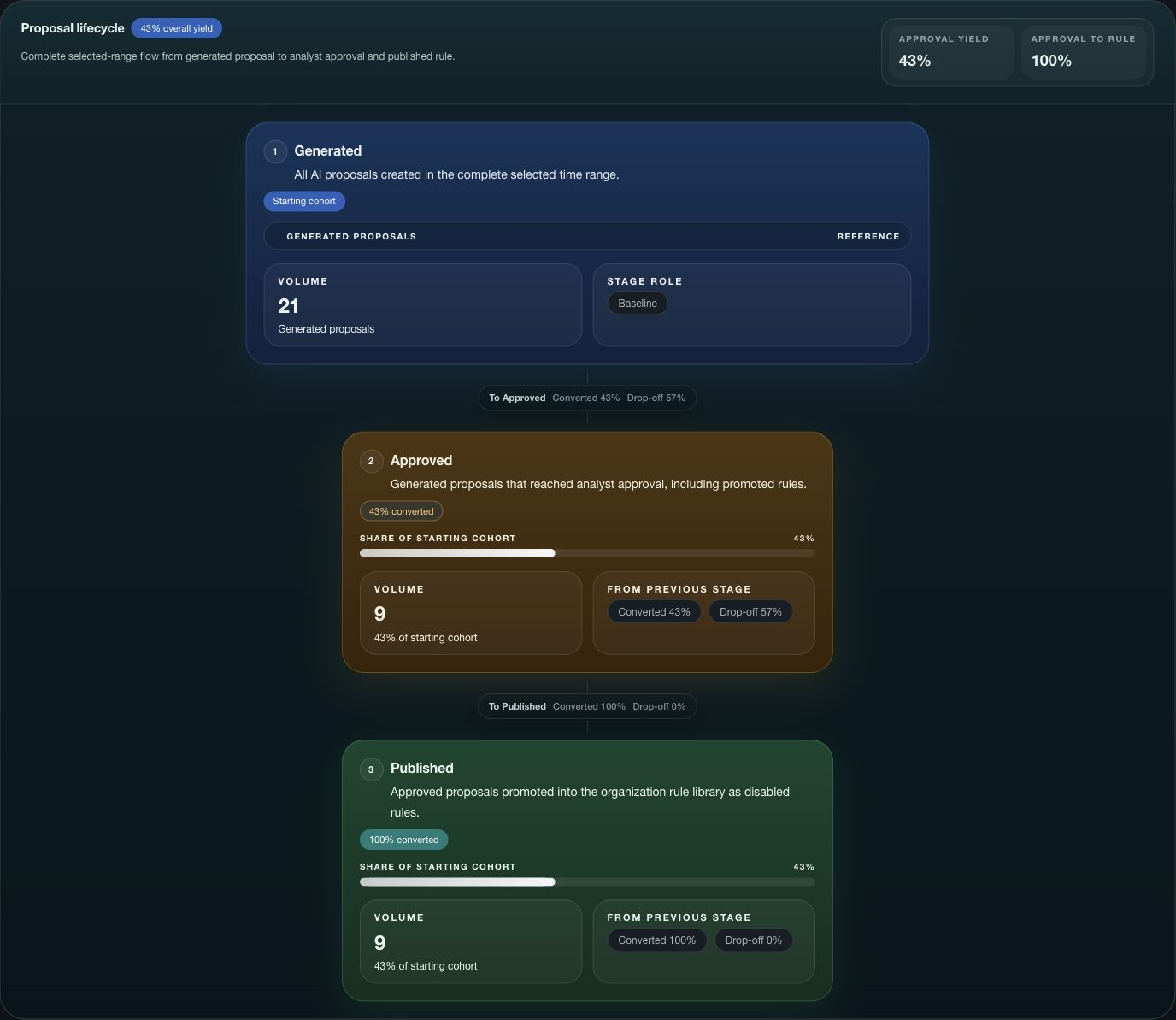
Each proposal explains the gap it addresses, the activity the rule is intended to detect, and the evidence behind the recommendation. Reviewers can examine its attack-technique mappings and validation results, then decide whether to continue through the configured approval process.
- 01
Qualify
Confirm the gap and the evidence that supports it.
- 02
Draft
Draft a rule and explain the activity it would detect.
- 03
Validate
Check structure, novelty, evidence and technique context.
- 04
Govern
Keep activation behind the configured review path.
03 · Autonomy With a Boundary
Faster detection engineering, without hidden publication.
Finding a gap and drafting a rule are separate from activating it. Proposed rules must meet the applicable validation and approval requirements before use.
- Draft-first by default: a generated proposal is not an active detection.
- Review what the proposed rule detects, why it is needed, and which events support it.
- A proposal that lacks required evidence or fails validation does not advance.
- Activation follows the configured governance path. The Nova Autonomous Detection Engine does not silently publish rules.
04 · Connected Defense System
The Nova Autonomous Detection Engine improves coverage because the engines stay connected.
Evaluate the Nova Autonomous Detection Engine
Review your detection gaps. See where NADE can help.
Hansec will confirm evidence fit, detection scope, proposal controls and the review path appropriate for your environment.