
Behavior analytics and anomaly scoring
Qyronis. Understand behavior. Investigate what changed.
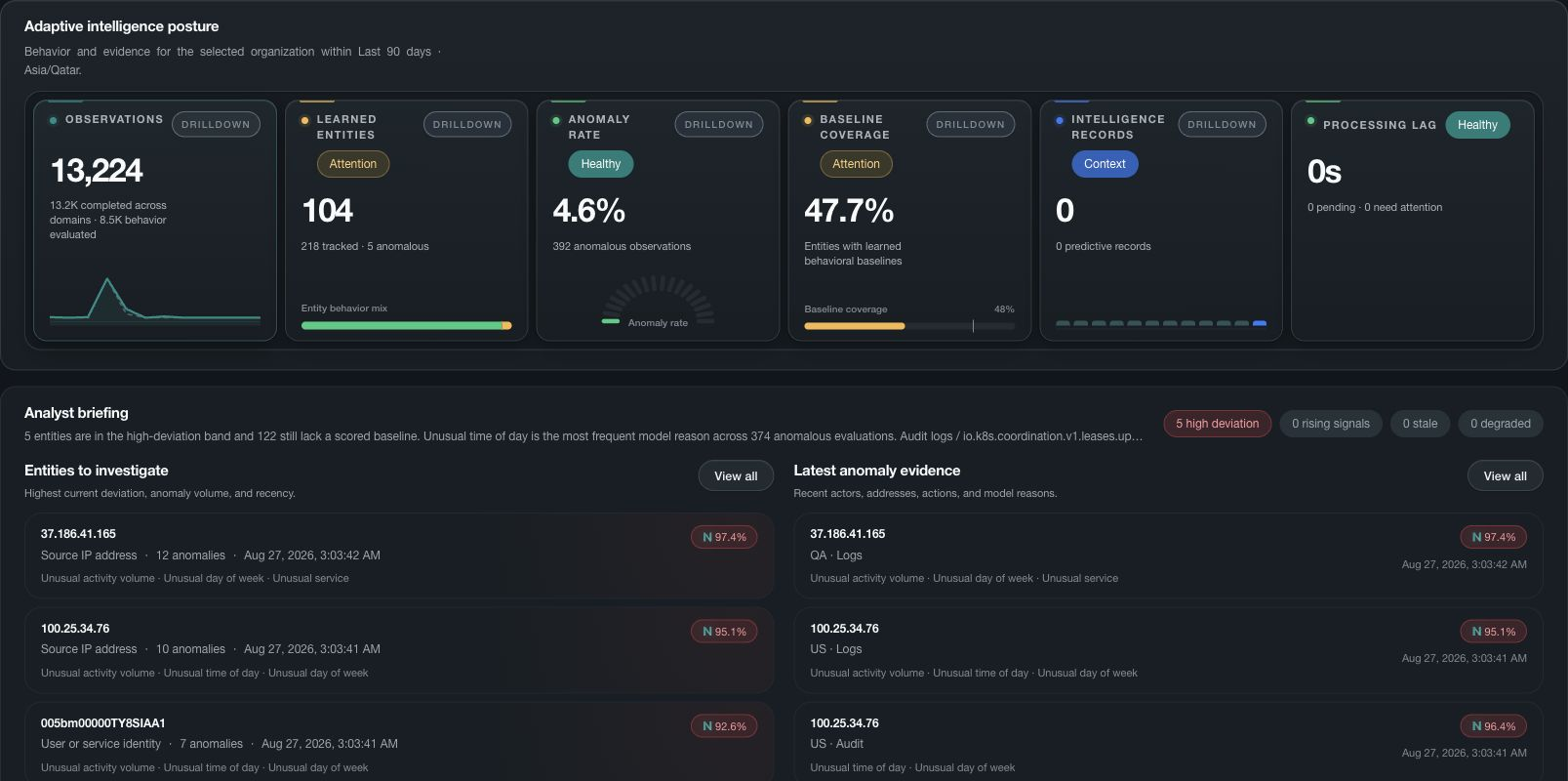
Qyronis builds a view of normal activity across identities, hosts, accounts, and cloud resources, then highlights changes that deserve investigation. Review an entity's behavior, compare an anomaly with its baseline, and follow supporting events and relationships in Qyronis Fusion. The assessment explains the change and its confidence without treating unusual activity as proof of compromise.
Usual behavior, unusual changes, and the evidence to investigate.
See how work moves through Nova
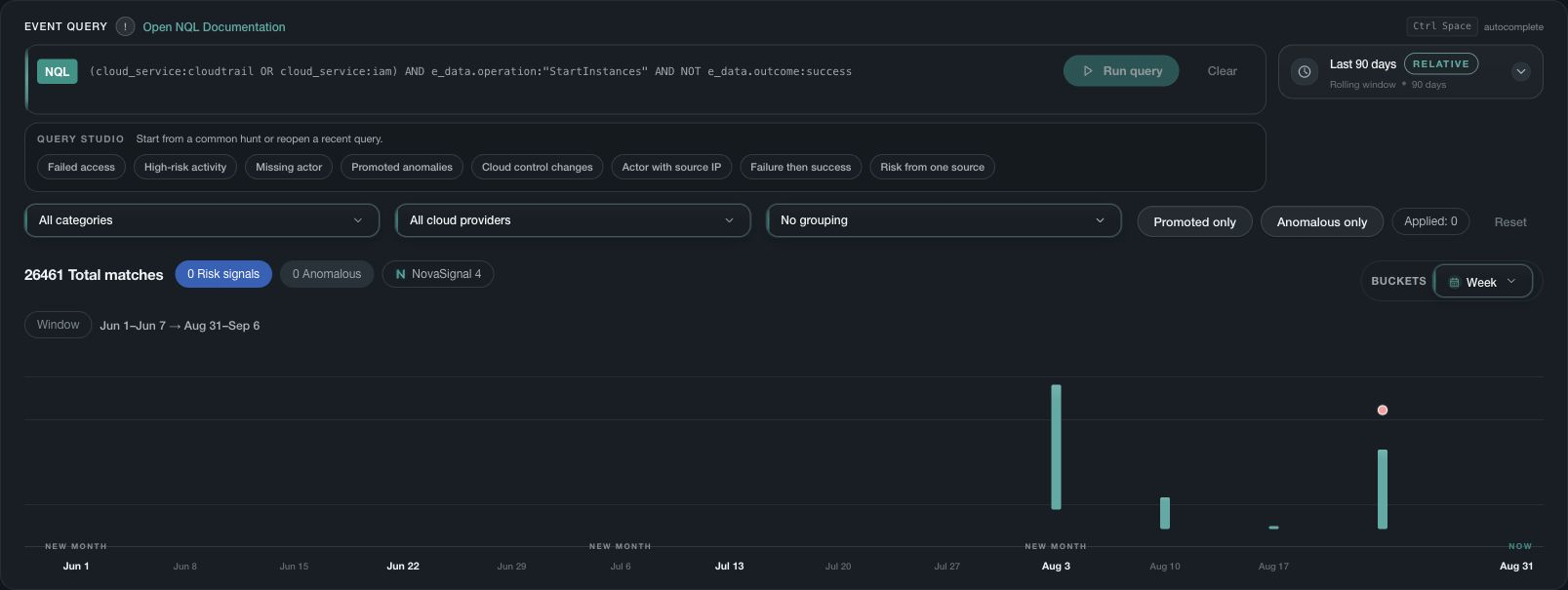
Move through current product views one step at a time. Each view answers a different security question and keeps the available evidence and limits visible.
QYRONIS
Behavior analysis adds a different perspective to a rule-based alert. Qyronis helps analysts recognize changes in an entity's activity and examine the events that explain them. Its findings inform investigation and Threat Hunting. They do not create an alert or authorize response on their own.
01 · Behavior Intelligence
Learn what is usual. Surface what is different. Keep the distinction honest.
Qyronis uses past activity to understand usual behavior. It checks the quality and availability of the data before highlighting a change. An unusual event is a reason to investigate, not automatic proof of compromise.
Entity behavior
Learn the usual activity of identities, addresses, hosts, accounts, and resources from the security data available.
Anomaly assessment
Compare current activity with the profile that existed before it, then show score, confidence and reasons together.
Intent and sequence
Highlight sequences of unusual actions for investigation without treating them as proof of malicious intent.
Drift and exposure trajectory
Follow assessed configuration, ownership, permission, public-exposure and attack-path change over time.
Evidence convergence
Review related behavior, cloud findings, and threat information when they refer to the same identity or resource during the relevant period.
Behavior trends
Highlight a developing behavior trend only when enough recent activity and supporting data are available.
02 · Trajectory, Not a Snapshot
Behavior matters in relation to what came before.
Compare current activity with the previously learned behavior, then use new observations to inform later assessments.
Observe source-linked activity
Use focused observations that stay connected to their source evidence.
Compare with prior behavior
Measure rarity, change and sequence against what was previously known for the entity.
Attach reasons and confidence
Keep the score connected to assessment reasons, source references, freshness and coverage.
Retain the new trajectory
Use learned history in later assessments while preserving the original events.
03 · Assessment status
Not enough evidence is a result worth showing clearly.
A new entity may not yet have enough history for a meaningful comparison. Qyronis shows when it is still learning, when an assessment is available, and when missing data limits the result. An unavailable assessment does not mean the activity is normal.
Learning
History is still insufficient. Score and verdict remain unset.
Computed
The applicable behavior assessment produced a result.
Not assessed
Required evidence is absent or incomplete. No normality claim is made.
Degraded
Processing completed with reduced evidence or capability.
04 · A Clear Analytical Boundary
Anomaly scoring stays valuable because it does not pretend to be a verdict.
Qyronis provides behavior evidence and can selectively prioritize an already-qualified hunt hypothesis. Proactive Hunting still owns independent support, drift and validation checks, while detections, risk scoring and response retain their own responsibilities.
- Behavior deviation is evidence for investigation, not proof of malicious intent.
- Risk, severity and threat context remain distinct from Qyronis behavior intelligence.
- Missing source coverage remains visible and is never represented as normal activity.
- Qyronis may help prioritize an already-qualified hunt hypothesis, but it never creates a hunt on its own.
- Recent activity alone does not establish a threat. Review the behavioral change and its supporting evidence together.
Connected behavioral intelligence
From unusual behavior to a focused threat hunt.
Qyronis can help prioritize hunting hypotheses when unusual behavior or a growing risk warrants closer inspection. Proactive Hunting then searches related events for repeated behavior, supporting evidence and activity that did not trigger alerts.
What behavior is deviating, and where might it be heading?
Learns normal behavior for identities and assets, then identifies unusual activity and changes that may indicate a growing threat.
- Semantic anomaly
- Progressive intent
- Materially rising trajectory
Timing alone does not advance a candidate.
Independent support + drift checksDoes the same behavior appear in other events, including activity that did not trigger an alert? What should an analyst check next?
Searches beyond the original alerts for repeated behavior and matching activity, then reports the evidence found and any gaps in coverage.
- Suggestion
- Execution
- Finding
- Hunt Insight
- Report
05 · Connected Intelligence
Behavior analytics alongside investigation and response.
Use Qyronis assessments with NovaSignal alert priority, Velora investigation assistance, and DRX response controls. A behavior assessment does not replace those capabilities or authorize an action.
Evaluate Qyronis
Investigate the behavior your team needs to understand.
Discuss your data sources, available history, and investigation questions with Hansec to plan a Qyronis evaluation.