
What a posture finding means
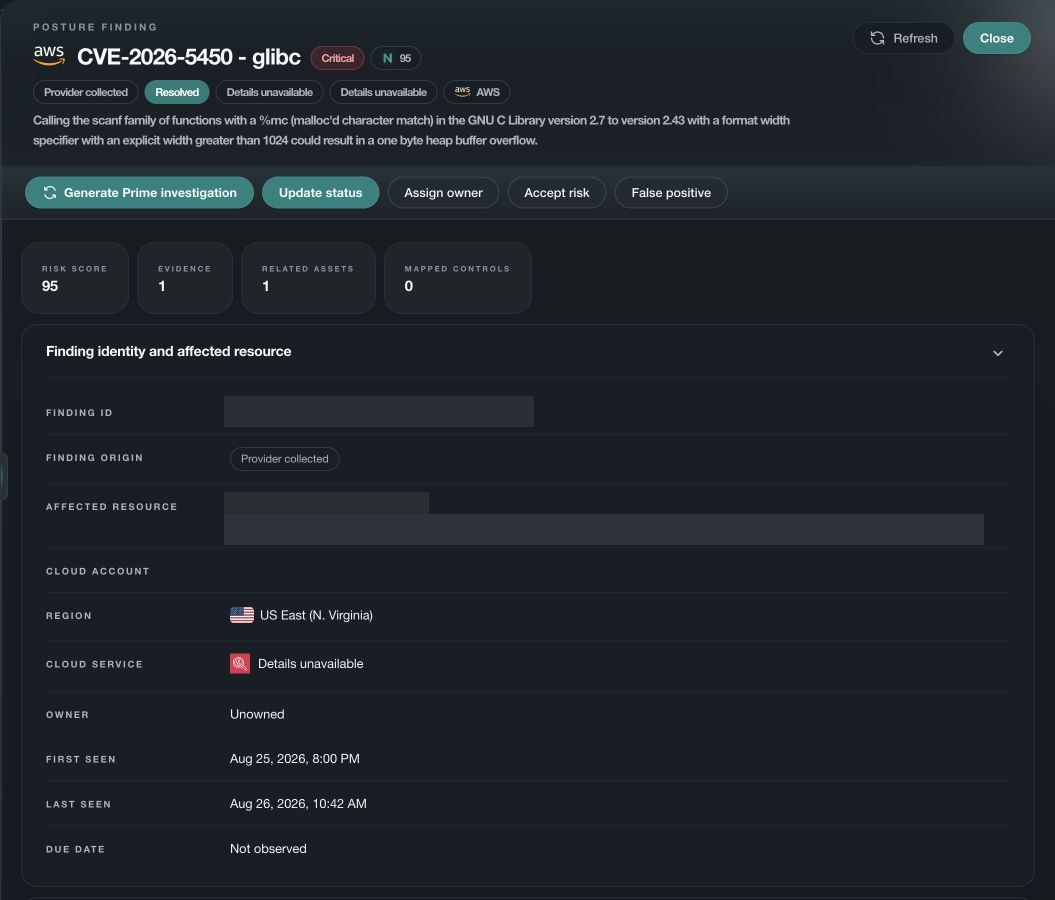
A posture finding records that available evidence did not meet an expected security condition for a supported resource and assessment. It should identify the affected resource, the condition checked, the evidence time, and the context needed to decide what to do next.
Severity describes the potential importance of the condition. Reachability, exposure, data context, business importance, compensating controls, and current activity can change the practical priority.
Review a finding before assigning work
- Confirm the resource identity, environment, owner, and evidence time.
- Read the expected condition and the observed evidence rather than relying on the title alone.
- Check external exposure, reachable relationships, identity context, sensitive data, and active threats.
- Review duplicate, exception, accepted-risk, and remediation state without treating them as proof that the condition disappeared.
- Verify the result after a change with new evidence from the intended scope.
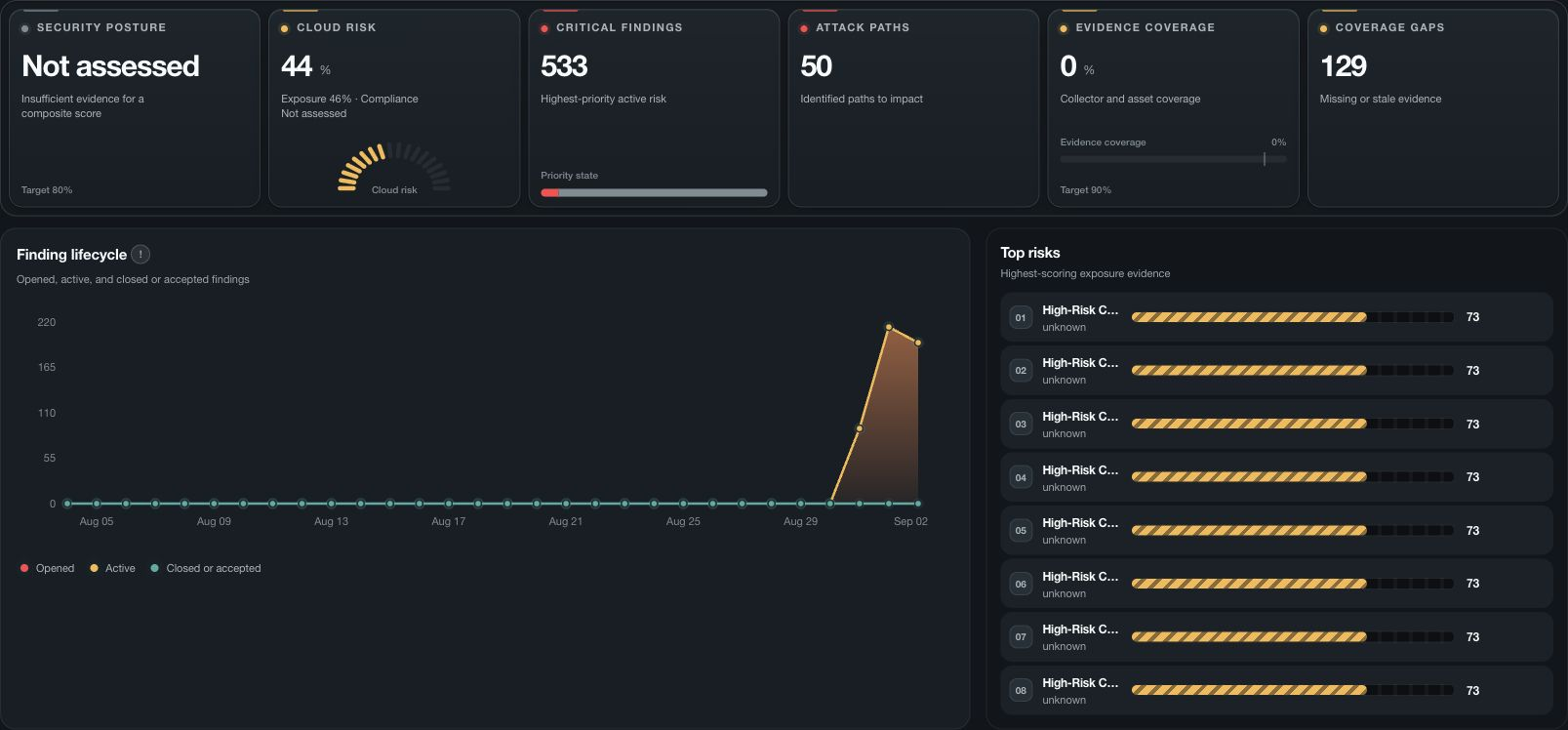
Coverage is part of the result
A clean view is meaningful only when the intended providers, accounts, regions, resource types, and checks were assessed successfully. Missing, skipped, unsupported, delayed, or failed assessment must remain separate from a passing control.