
The role of the Nova Autonomous Detection Engine
The Nova Autonomous Detection Engine reviews evidence already available in Nova for gaps in detection coverage. It can draft a proposed rule, explain why it may help, identify the activity it should detect and link relevant attack techniques.
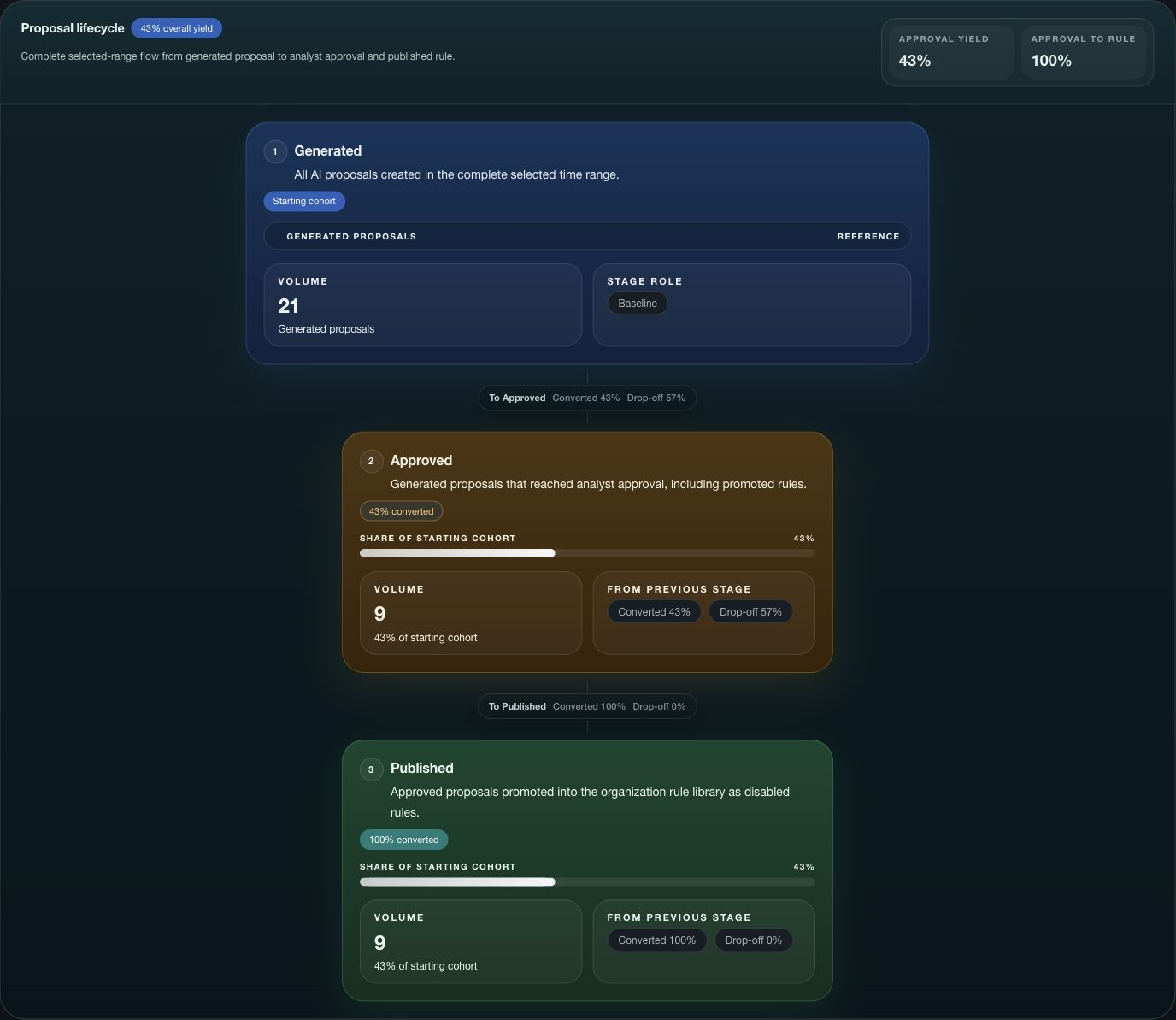
NADE can discover opportunities and prepare drafts automatically. A draft is not an active rule. Activation still requires the relevant checks and approval, and proposals that lack evidence or fail validation do not proceed.
Evidence that can support a proposal
- Coverage gaps
- Recurring activity or security questions that the current detection set does not fully address.
- Reviewed anomaly context
- Behavioral change from Qyronis used as context, never as proof on its own.
- Threat relevance
- Applicable threat intelligence and technique context that explains why a proposed detection matters.
- Observed evidence
- Evidence from the customer's environment that explains why the proposed rule is relevant.
- Detection outcomes
- Alert volumes, analyst feedback and changes in rule behavior that may show where detection needs improvement.
From proposed rule to approval
-
01
Qualify
Confirm the coverage question and the evidence that supports it.
-
02
Draft
Draft a rule with the reason for the change, expected alerts and relevant attack techniques.
-
03
Validate
Check structure, novelty, required fields, evidence support, and intended behavior.
-
04
Review
Let the responsible customer team examine the proposal, limitations, and validation result.
-
05
Govern
Keep publication or activation behind the configured approval and change path.
What to check in a proposed rule
- The coverage need and the customer evidence that supports it.
- The proposed detection logic and the source family it is designed to evaluate.
- The expected signal, technique context, and reason the proposal may improve coverage.
- The novelty, structure, quality, and evidence checks performed before review.
- The current lifecycle state, review history, and any reason the proposal cannot advance.
Boundaries that protect detection integrity
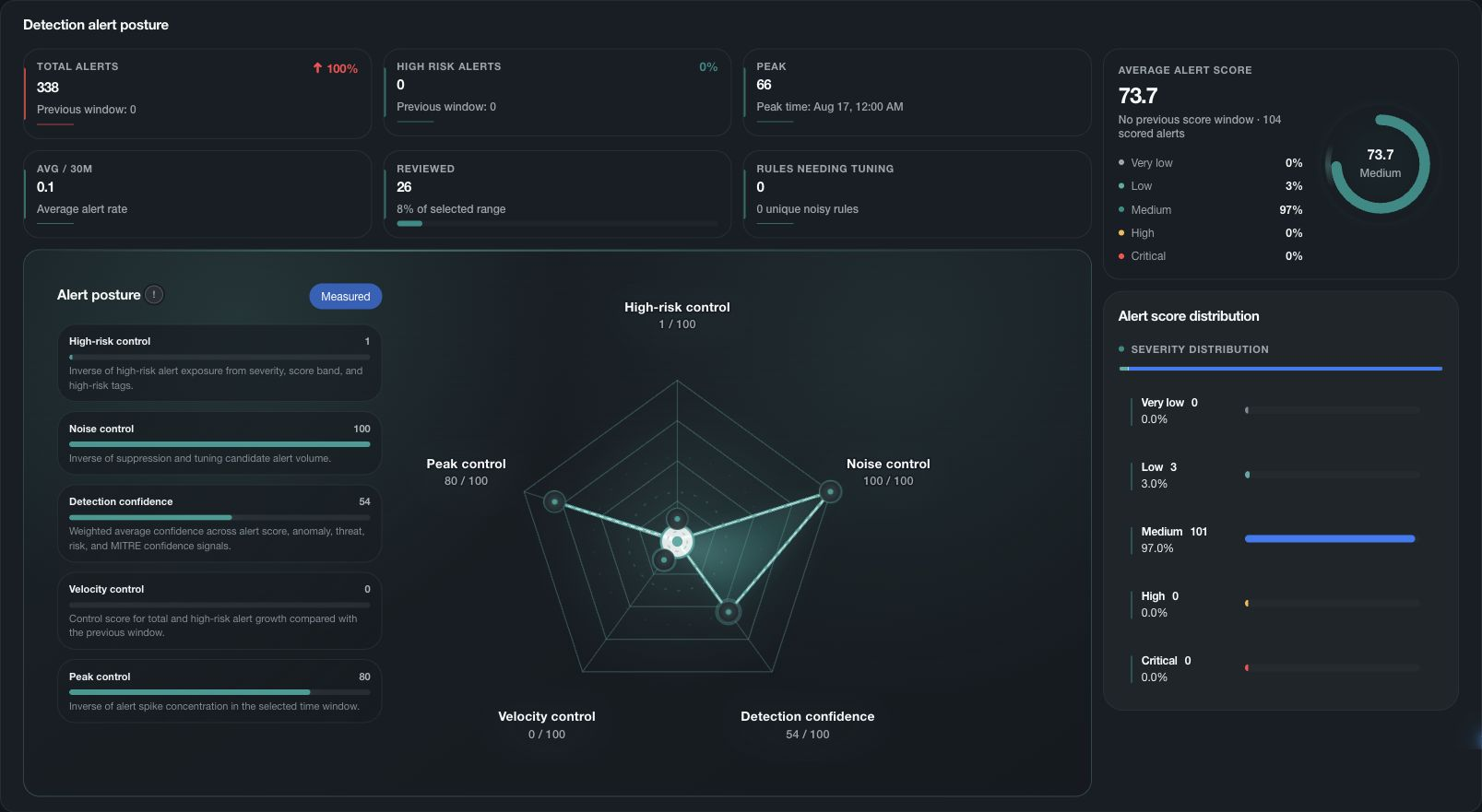
- The engine does not assign Qyronis anomaly scores or replace NovaSignal alert prioritization.
- A proposal remains inactive by default and cannot become a live rule through drafting alone.
- Missing evidence, invalid structure, or failed validation blocks advancement.
- Customer review and the configured governance path determine whether a validated proposal is accepted.