
The role of Velora
Velora is the intelligence engine at the center of Nova. It connects alerts, findings, entities, activity, posture, threat context, timelines, and prior assessments so a team can understand the case without separating a conclusion from the evidence that supports it.
Velora reasons and recommends. It does not directly perform provider actions. When a supported response is appropriate, the recommendation moves to the separate DRX control path for scope, policy, approval, and execution review.
What Velora brings to an investigation
- Evidence-grounded assessment
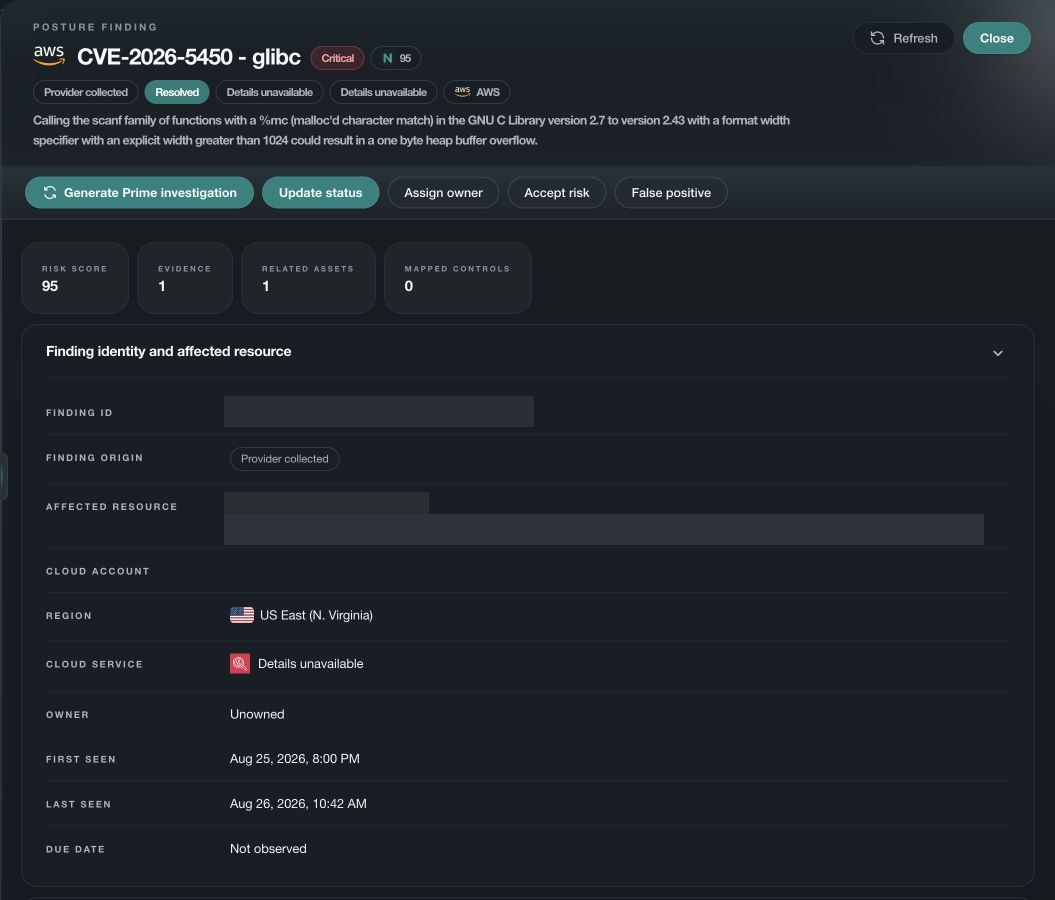
- Connects the assessment to the records, findings, entities, and timelines that support it.
- Entity and threat context
- Builds a coherent view across identities, assets, behavior, exposure, and relevant threat information.
- Baseline and change
- Keeps expected behavior and meaningful drift visible without treating change as proof of compromise.
- Memory with continuity
- Carries forward relevant history, prior assessments, and unresolved questions without rewriting the evidence.
- Investigation guidance
- Frames the supported next question or action while confidence and uncertainty remain attached.
- Response recommendations
- Suggests a response for review in DRX. The recommendation does not run an action or grant permission to do so.
The Velora reasoning cycle
-
01
Observe
Review the available source evidence and its quality.
-
02
Connect
Relate entities, events, findings, timelines, baselines, and prior assessments.
-
03
Assess
Separate observed facts, supported conclusions, assumptions, and unresolved gaps.
-
04
Guide
Suggest further checks with references to the evidence, a confidence level and any limitations.
Where customers use Velora
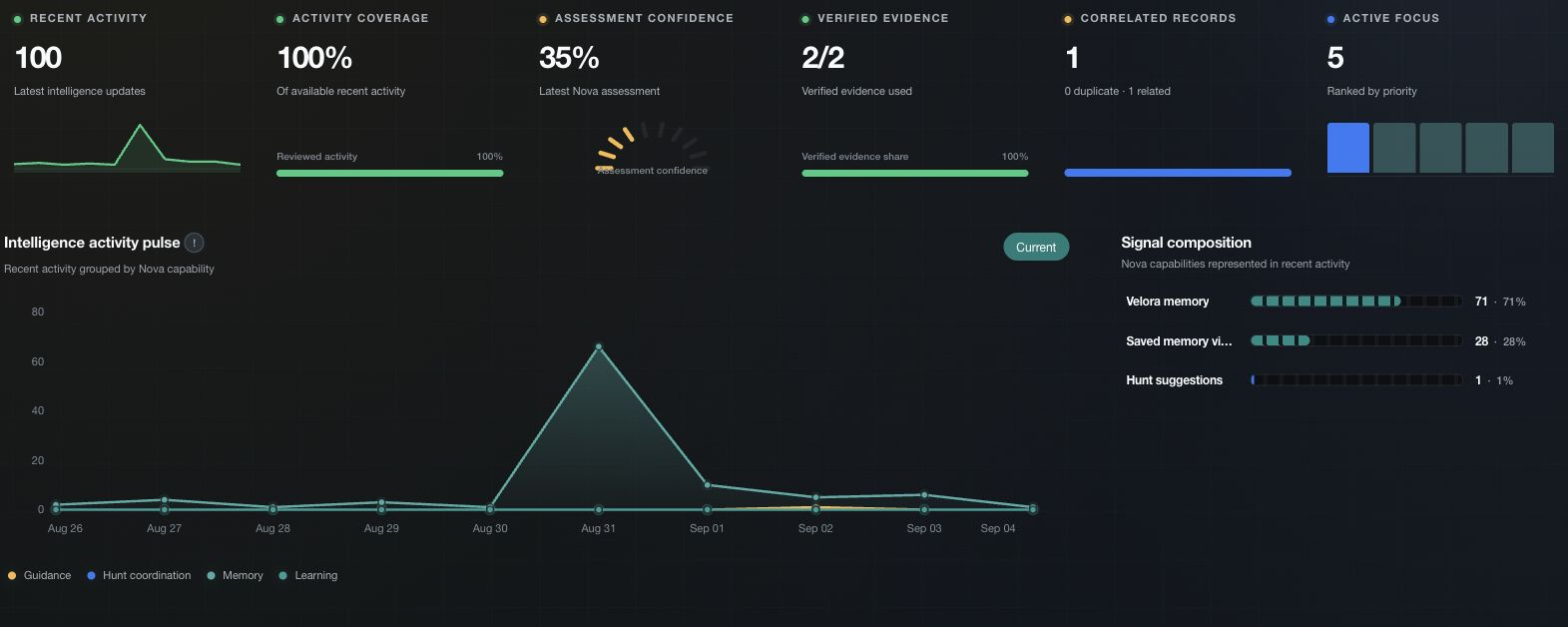
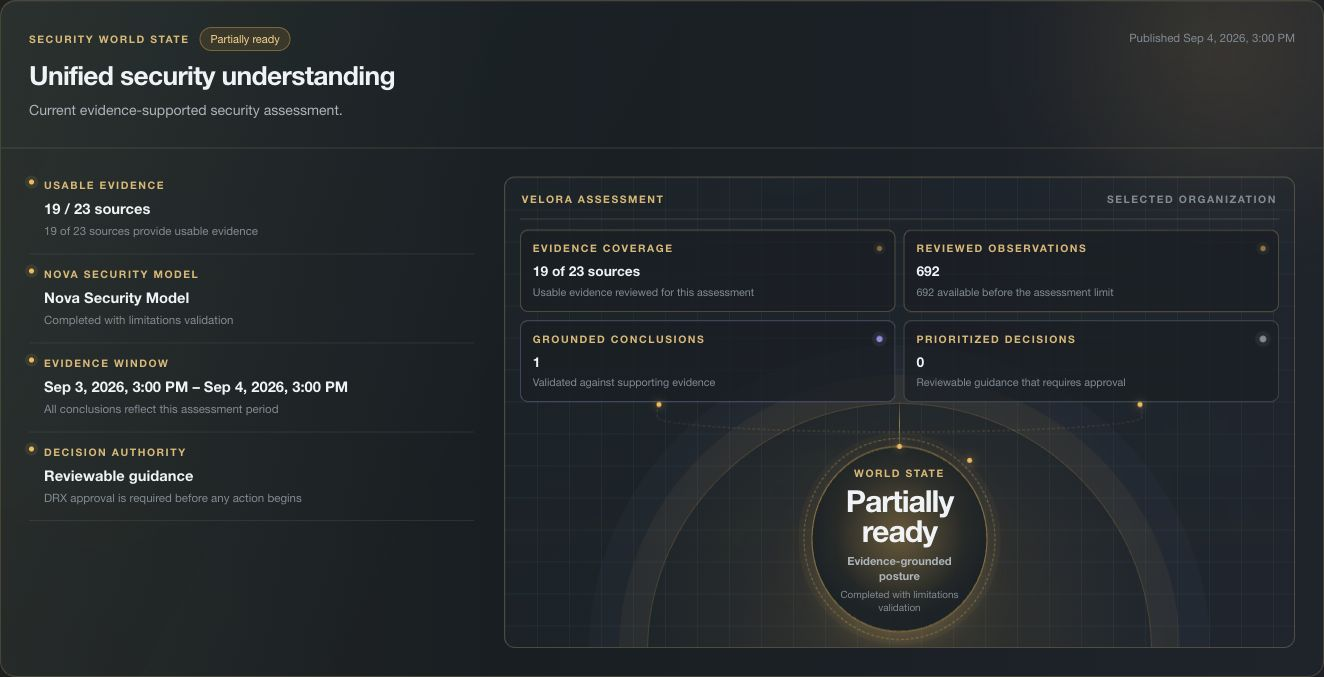
- Use the command center to review current priorities, evidence quality, and investigations that need attention.
- Use reasoning assessments to distinguish facts, supported conclusions, and unresolved questions.
- Use investigation guidance to ask a focused security question and continue into the underlying evidence.
- Use the threat graph to follow supported relationships across entities, activity, findings, and investigations.
- Use retained context to understand how the current case relates to prior assessments without treating history as new evidence.
Core reasoning and eligible Prime synthesis
Velora’s evidence-led foundation can assemble the case, entities, timeline, confidence, and quality state without relying on natural-language generation. This is the durable assessment layer.
Where included and permitted, Nova Prime can add citation-validated synthesis, briefings, and natural-language guidance for eligible cases. Prime adds assistance to Velora. It does not replace the evidence ledger or become a separate engine.
How to review Velora output
- Open the cited source records and confirm they support the stated conclusion.
- Check the selected customer scope, time window, entities, and evidence freshness.
- Distinguish an observed fact from an inference, recommendation, or unresolved question.
- Confirm that any proposed response follows the separate DRX approval and execution path.